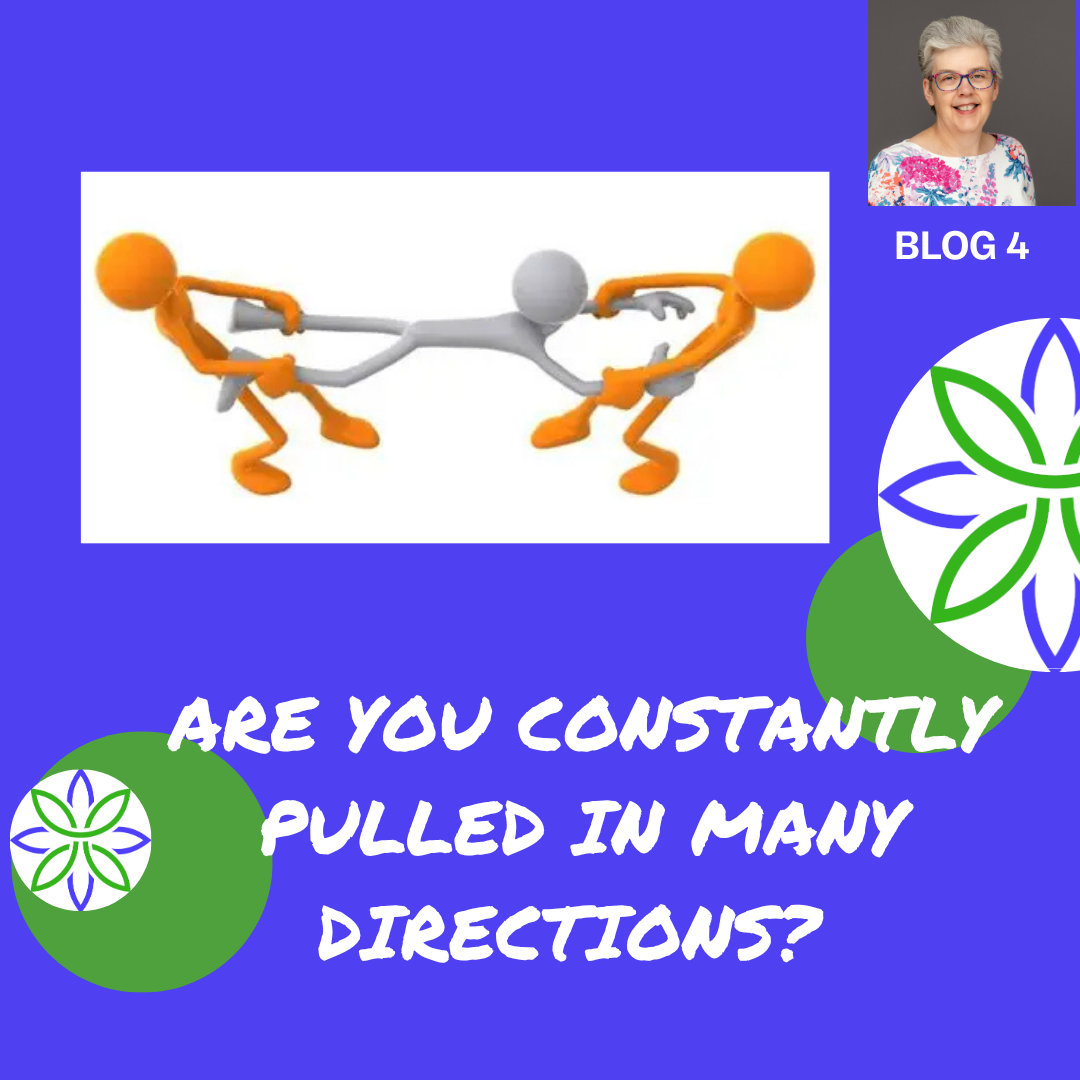
Are you constantly pulled in many directions?
How can I make changes to my life?
Does the tug of priorities feel like they are tearing you apart? Do you feel like there are many people making demands on your time, and you barely have enough hours in your day to do the urgent things in life let alone find time to plan and reorganise and improve your life?
Maybe you have a job and the boss keeps expecting you to do overtime. You have family, a partner you seem to be constantly passing like ships in the night; just talking about life logistics. You have friends you share a hobby with that takes time and you love but you struggle to fit it in. You have elderly parents with growing needs, they don’t shout but the need is increasing and you can see it and you are the child who lives nearest to them. And there is a house that needs cleaning and mouths that need feeding. You are wondering how to change your life but you hardly have a moment to yourself. You really want to change but seem to be going around in circles.
I was enjoying working full time for the first time in years, enjoying a job that used my core skill to help others progress. It was really rewarding but it left little time for the rest of life and was a big adjustment. While I had already been working, I had been working in a school so had school holidays and the job had a tiny commute which I could walk, so it took up less time. I was managing the house and making meals from scratch as it’s much healthier than buying processed meals but in reality I was putting everyone else's needs before my own. It was fine during Covid as we were working from home which eliminated the commute which gave me at least 90 extra minutes a day.
I was working for 2 charities on the same project, one had a far healthier working culture than the other. The unhealthy one was adding to my stress levels.
My mother in law had recently died. We had a large 4 bed house to help clear. Her family events and visits were no longer in our diary but it was a huge house and her boys didn’t manage to clear it together, so it meant lots of weekends travelling up to her house to sort through stuff, lots of nice stuff, papers, clothes, china and belongings not to mention a garage and a garden shed! The rest of life carried on. Time for me to rest and do my hobbies, and keep up with friends was reduced too far. I said some no’s but not enough.
Stressed out by it all and struggling to acknowledge or manage grief, having been brought up in a home where grief was never acknowledged or mentioned. I plugged on until.
I burnt out and sought some bereavement listening support. The first thing she said was you need a wellbeing plan, make time to do something that you enjoy, every day. Then I started to put my needs higher up the list, instead of at the bottom of the list, in the if there is time category. I found the accountability of talking to the bereavement listener really helpful in re ordering my life and in helping me acknowledge the emotions associated with grief.
I also decided that this was the time to change my working hours and stop working for the much more stressful job, with an unhelpful work culture. I left one charity and increased my hours at the other charity, but not up to full time.
As I did this I made more time to craft and I put a regular walk in the diary with a good friend. I made more time to potter around in my garden and focus on being.
So what was the solution to my exhausting existence?
1. Acknowledge that I was exhausted and grieving, and I needed to allow myself space and time to grieve and reflect and do things I enjoyed.
2. To recognise my needs matter and need to be a priority, especially when I am grieving and learning to grieve, acknowledging also that grief can be exhausting.
3. Find some accountability, someone who has been there and understood.
For me it was a bereavement listener, someone who had experienced grief and had done some training that meant she was well equipped to help. She also had compassion and empathy and not just answers. She wasn’t trying to fix me.
4. Make space to reflect. If you haven’t done this before and you live from your thoughts this may take some practice but it can be done. You might want to find a coach to help you. I went on a crossroads retreat led by people experienced in helping people at transition points in their life. It was also helpful to journey with fellow travellers on a similar road.
5. Learn to journal or reflect using written words or art. Sometimes just 20 minutes a day writing in a journal can really improve your wellbeing. There is scientific proof for this. It may be helpful to be courageous and enter the world of expressing yourself through art. This is not about passing an art exam, it's about messing about with paint and pens and colour, or even ink. It helps bypass the intellectual part of the brain and connect you to your heart. I challenged myself, pushing out of my comfort zone and signed up for a basic painting workshop ( whilst thinking I can’t paint) and surprised myself with what the tutor enabled me to produce!
The real surprise was when I applied a hairdryer to dry my picture and it blew the blue ink all over the place and the picture came alive!
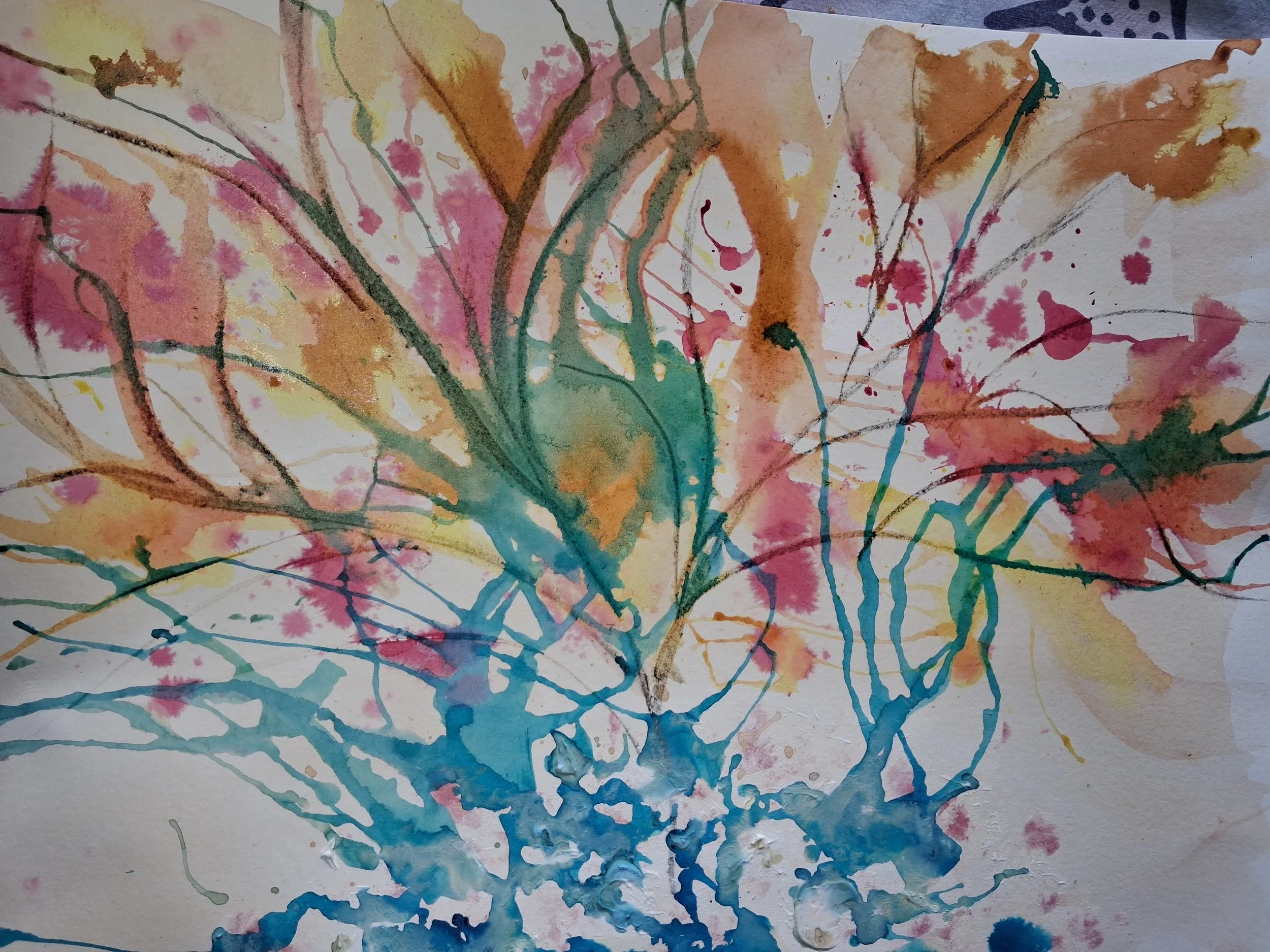
My painting from a painting workshop - dried by a hairdryer which blew the blue to unexpected places.
So in a nutshell what do I suggest as useful steps
Recognise you have a problem, which can be the hard bit
Decide you want to change
Get an accountability partner or coach to help you keep moving. Someone who believes in you when you don’t.
Feel the fear and do it anyway, break out of your comfort zones, do it scared. This may be art, a change of career, a relocation. Fear is just false evidence appearing real so don’t be controlled by it.
So seize the moment, subscribe to my blog and decide right now what action you will take today so you start to move forward?
